By Andrew Bamji and Roy Abel
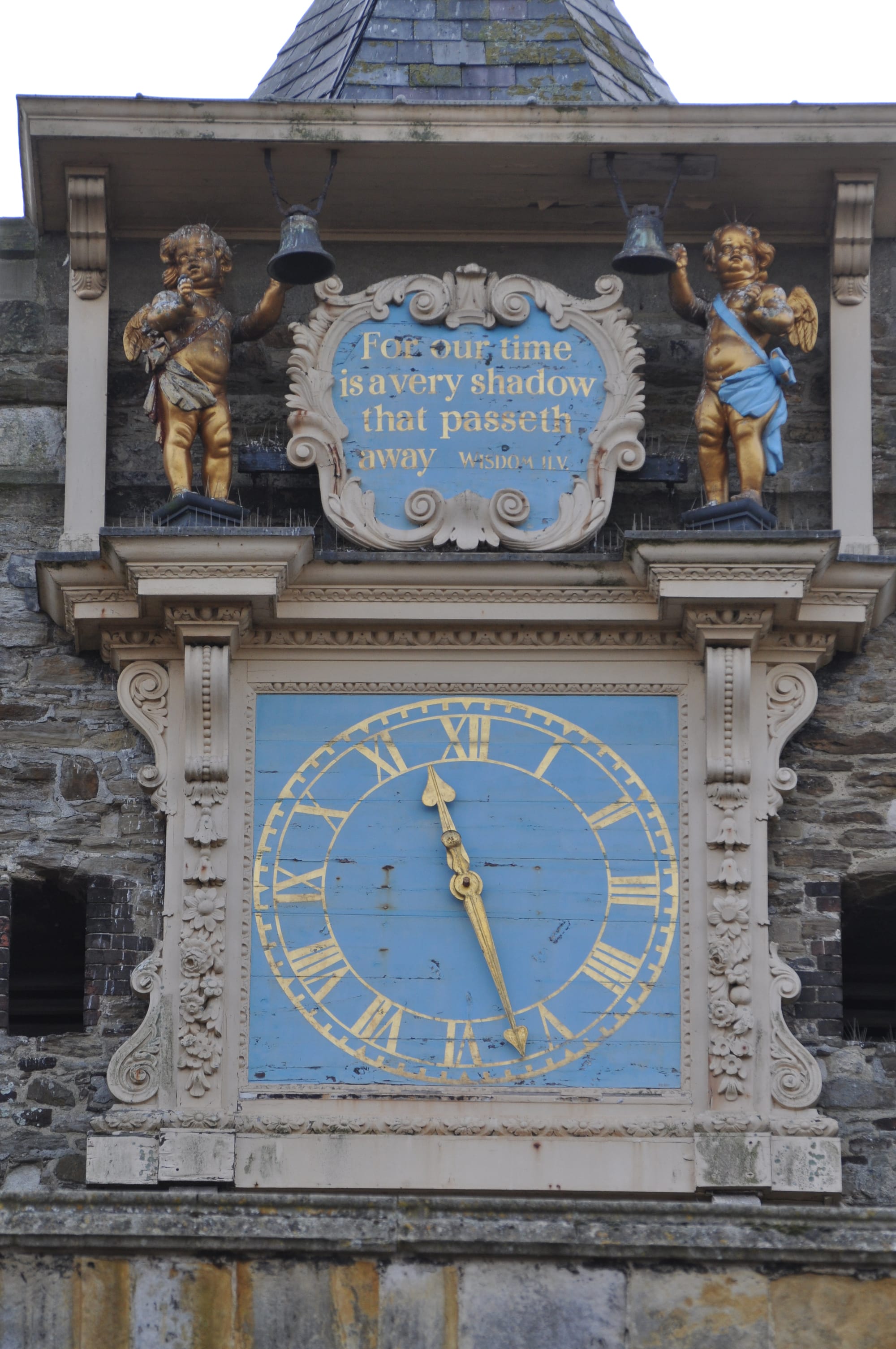
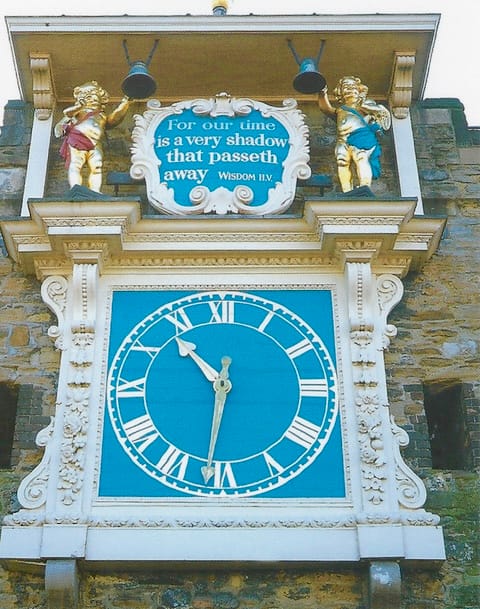
Regular readers of Rye News will be well-acquainted with the clock of St Mary the Virgin, with its striking blue face, the cartouche “For our Time is a very shadow which passeth away” and the jacks that strike the quarter hours, known as the Quarter Boys. If you have climbed the tower you will have passed the clock itself, and possibly been deafened if you were in the bell chamber when it struck the hour.
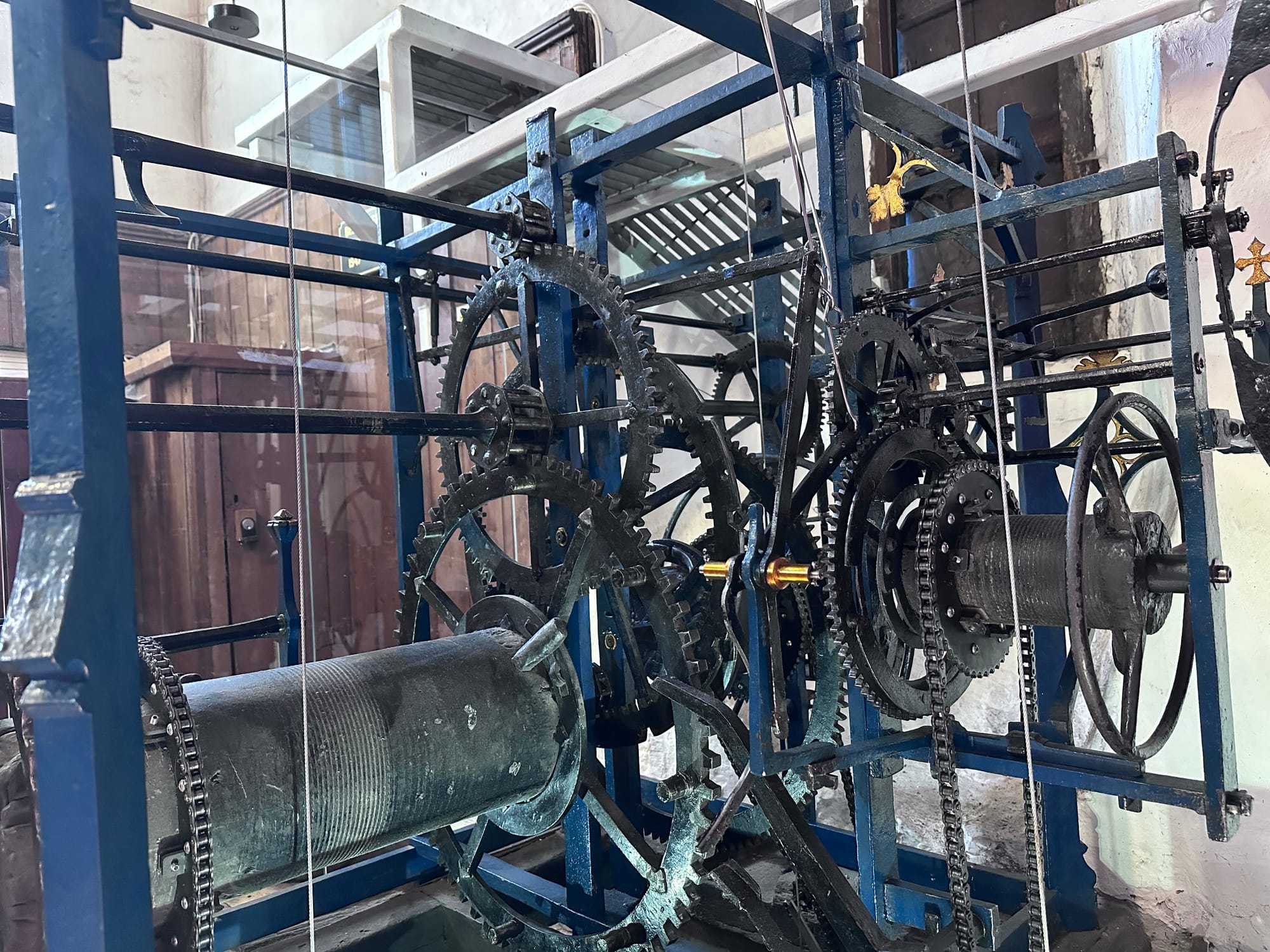
Recent research suggests that the clock, installed by Lewis Billiard in 1561, is much earlier in date. It closely resembles the clocks installed in Salisbury and Wells Cathedrals in the 1380s, and for stylistic reasons appears to be the earliest of the three. Can we prove this? We could, by carbon-dating a part of the frame, which has already been cut down when the clock was repositioned in the past. Billiard probably purchased it second-hand, possibly through the Royal clockmaker Alan Bawdyson to whom he was apprenticed. The clock at Hampton Court Palace was replaced in 1540; could ours be from there, or was it taken from a monastery at the time of the Dissolution a couple of years before?
The exterior dial was added in 1667; the mechanism for the Quarter Boys was added in 1760. The famous long pendulum, which has captivated thousands of visitors, dates from 1810. Horologists reckon that St Mary’s clock is the most important parish church clock in Britain and is likely to be the oldest turret clock still working and in its original position. Salisbury’s clock now sits on the floor of the nave. That from Wells is in the Science Museum.
Time never stands still and many modifications have been made. The clock had to be wound twice daily until electric motors were installed. The original driving weights were cannonballs, still lying on the floor of the ringing chamber but replaced by changeable weights. The working heart of the clock has been cared for over the years and is protected and in good order. The same, however, cannot be said for the clock face and exterior fittings.
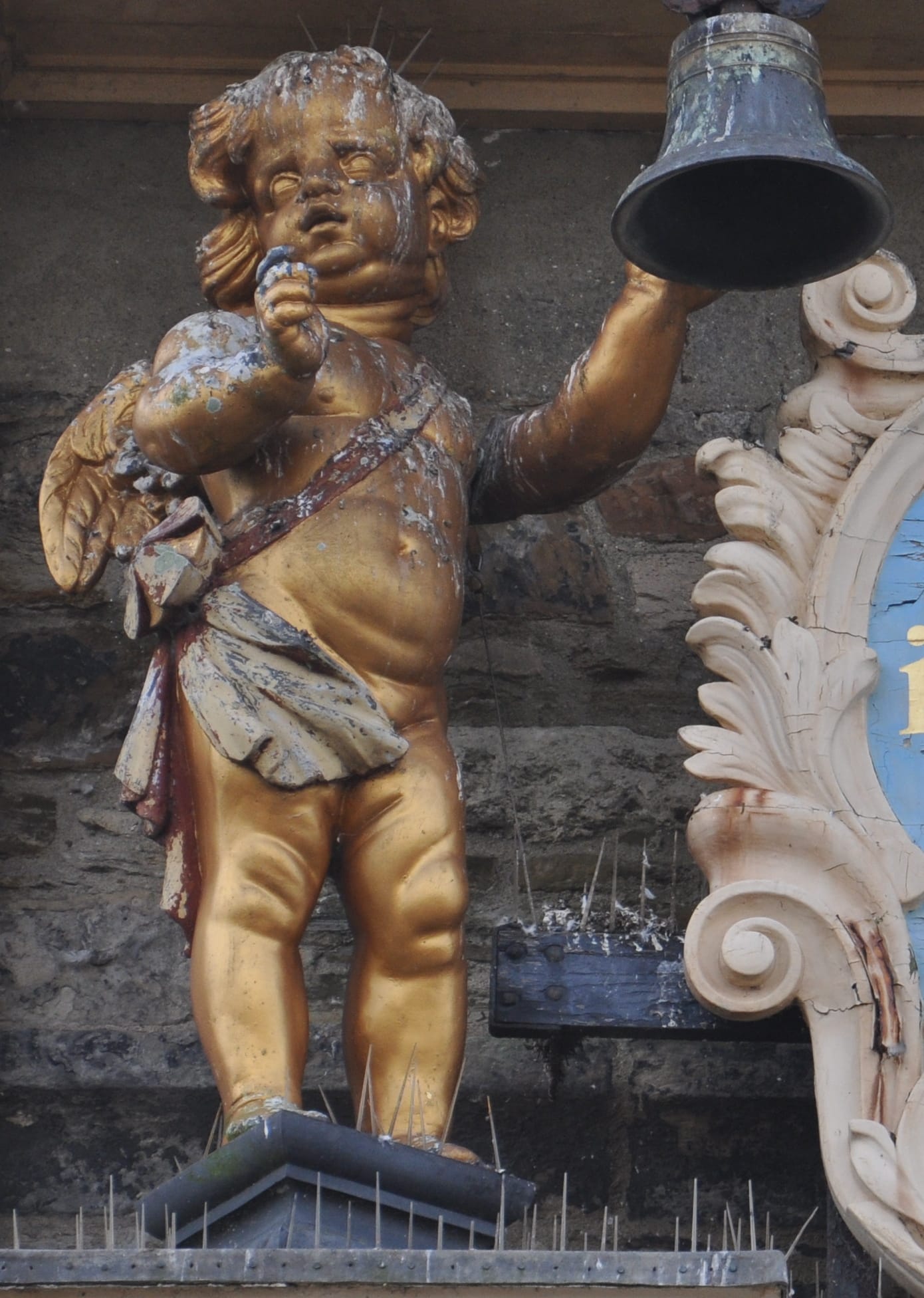
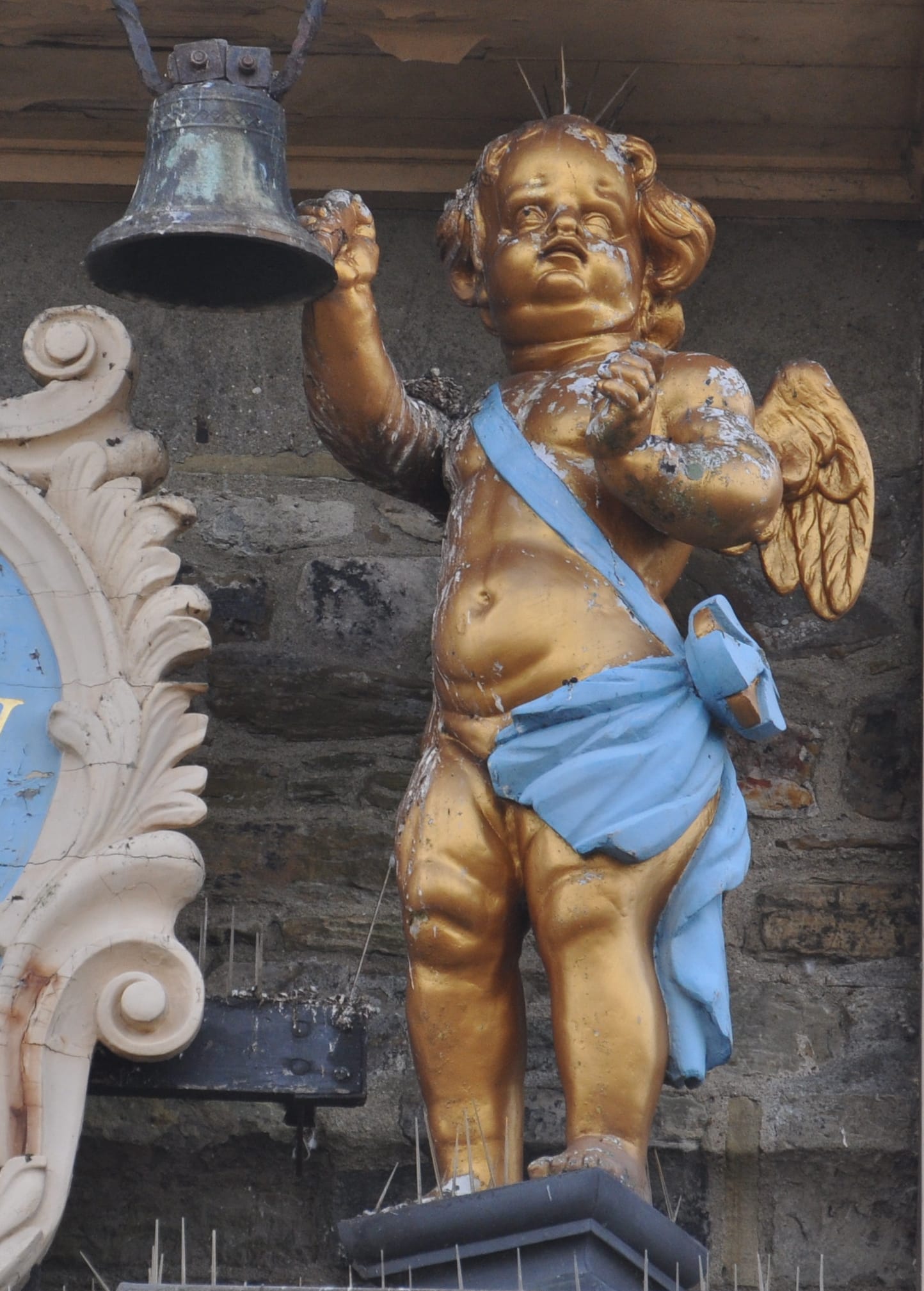
Newspaper articles dating back to the end of the 19th century document a series of redecorations of the outer parts. By 1969 the original wooden Boys had decayed beyond repair, one losing an arm, the other a leg, and they were replaced with fibreglass copies decorated with gold leaf and paint as the originals, which are now in the Clare Chapel. In 1986 the local firm of George Burnham and Sons repainted everything external and repaired some of the tower stonework.
Thanks to the Friends of the Church, the main mechanism of the clock was restored in 2012 by the Cumbria Clock Company, who have serviced it since. But 40 years of weather, ageing and pigeons have wrought their damage, and it was agreed the now shabby Boys should be refurbished.
However, as is so often the way, closer examination revealed far more. Take a pair of binoculars to Lion Street and you can see some of it; the face and cartouche, which are wood, have split and there are numerous rust marks. The Quarter Boys have dulled and the paint of their blue and red drapes is falling off. More worryingly the hangings of the Quarter Boy Bells are badly corroded and need to be replaced, and the bells themselves, like the Boys, are encrusted with pigeon droppings.
Restoration of such an important clock, which has told Rye residents the time for nearly 500 years, is vital. We have a plan. It is an expensive one. The first stage entails the taking down of the bells so the Quarter Boys will be silent. We will soon be starting a fundraising campaign for the full restoration. Watch this space.