


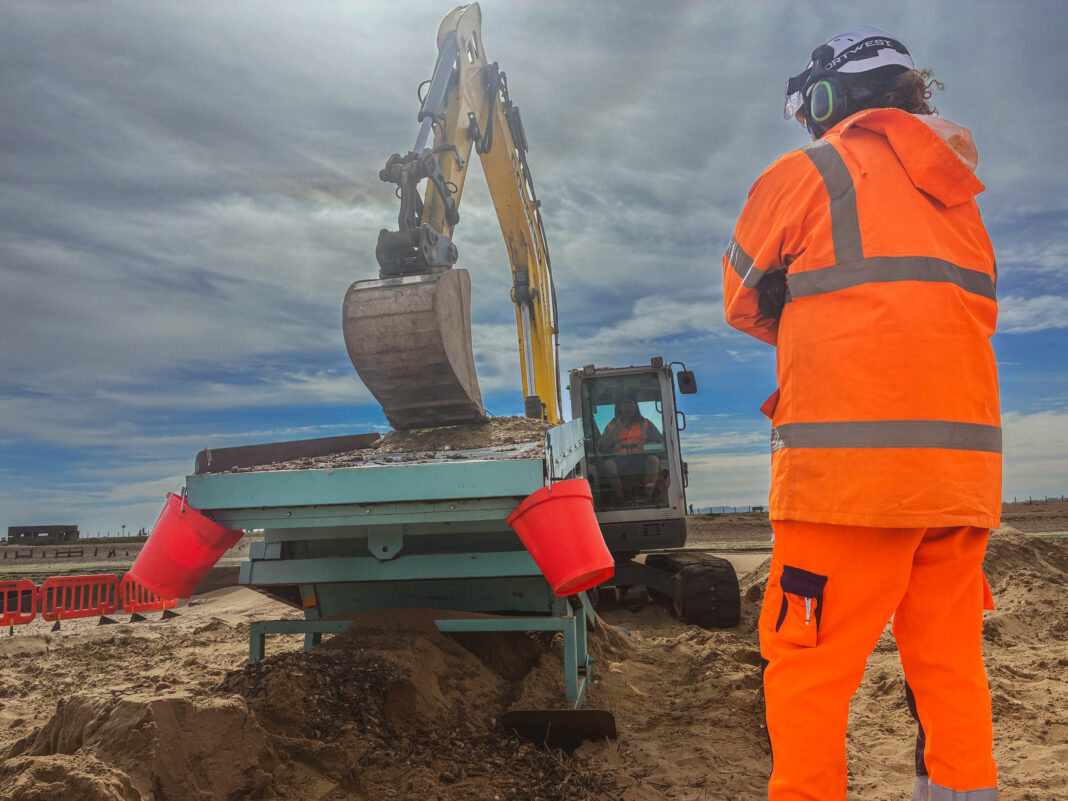
The team at Nurdle were hard at work over the Easter weekend, collecting litter and macro plastics along both banks of the tidal Rother, a 10-kilometre stretch from the sea up to the Union Canal below Playden, whilst waiting to get permission to use their new specialist machine, designed to take on the large scale coastal clean-up at Camber.
Nurdle and Southern Water have been at Camber Sands and Rye Harbour Nature Reserve following the release, in November 2025, of millions of plastic bio-beads from Southern Water’s Eastbourne water treatment works which have washed up in huge quantities on the beach at Camber Sands and in the saltmarsh of the reserve.
On Tuesday 14 April Josh Beech of Nurdle was excited to announce that the machine had been unveiled. “After a lot of development we have officially launched our new microplastic screener! This screener is designed to be loaded with a digger and travel along the beach at a rate of 25 metres a day on average and to remove pollution to a depth of 400mm. We are hoping to completely screen Camber for bio-beads, and other microplastics in around 3 to 6 months. There is a tracker on our website to show progress but feel free to come over and say hello whilst we’re working away! We will evaluate how successful this screening technique was at bringing down the pollution and possibly do it again if necessary next year or maybe just use the Nurdle machine over the winter after the big tides.”
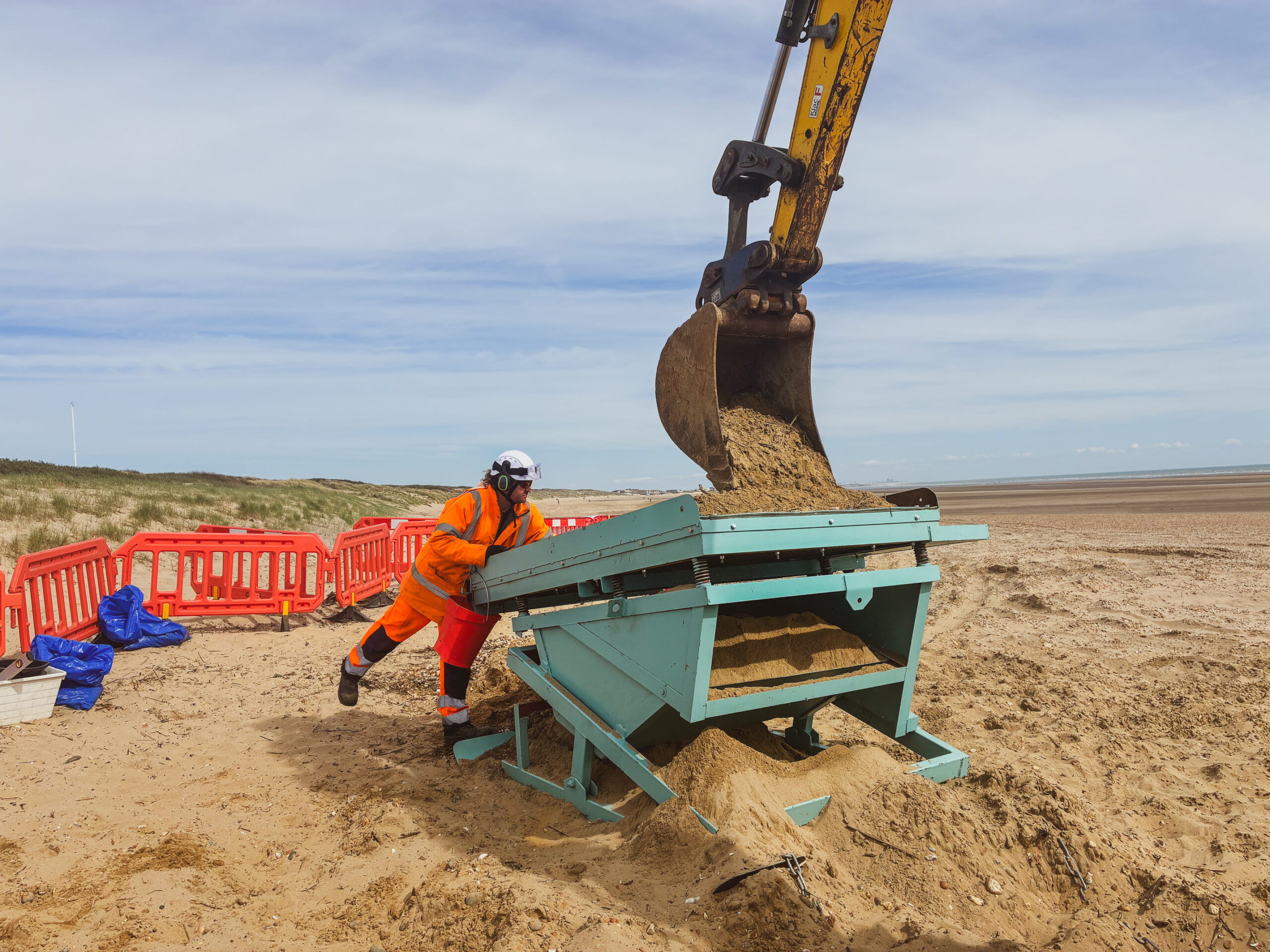
The new screener has complex different separation technologies and has taken Josh time to work out. “The thing that has been an issue is being able to sieve wet sand but we’ve got there and this machine can work in all conditions.”
Josh reports that over several days, before the new screener was introduced, they were able to collect a large amount of debris from along the river . “We made ourselves busy and took on the massive task of clearing the river Rother in partnership with Southern Water. We cleaned from the Discovery Centre to the tidal limit at Playden and back again to Camber Sands, hauling by hand nearly 800kg of old tyres, litter, oil barrels, boats and loads of other litter! We will be recycling what we can in house and Southern Water will be paying for the disposal of the rest of what we collected.”
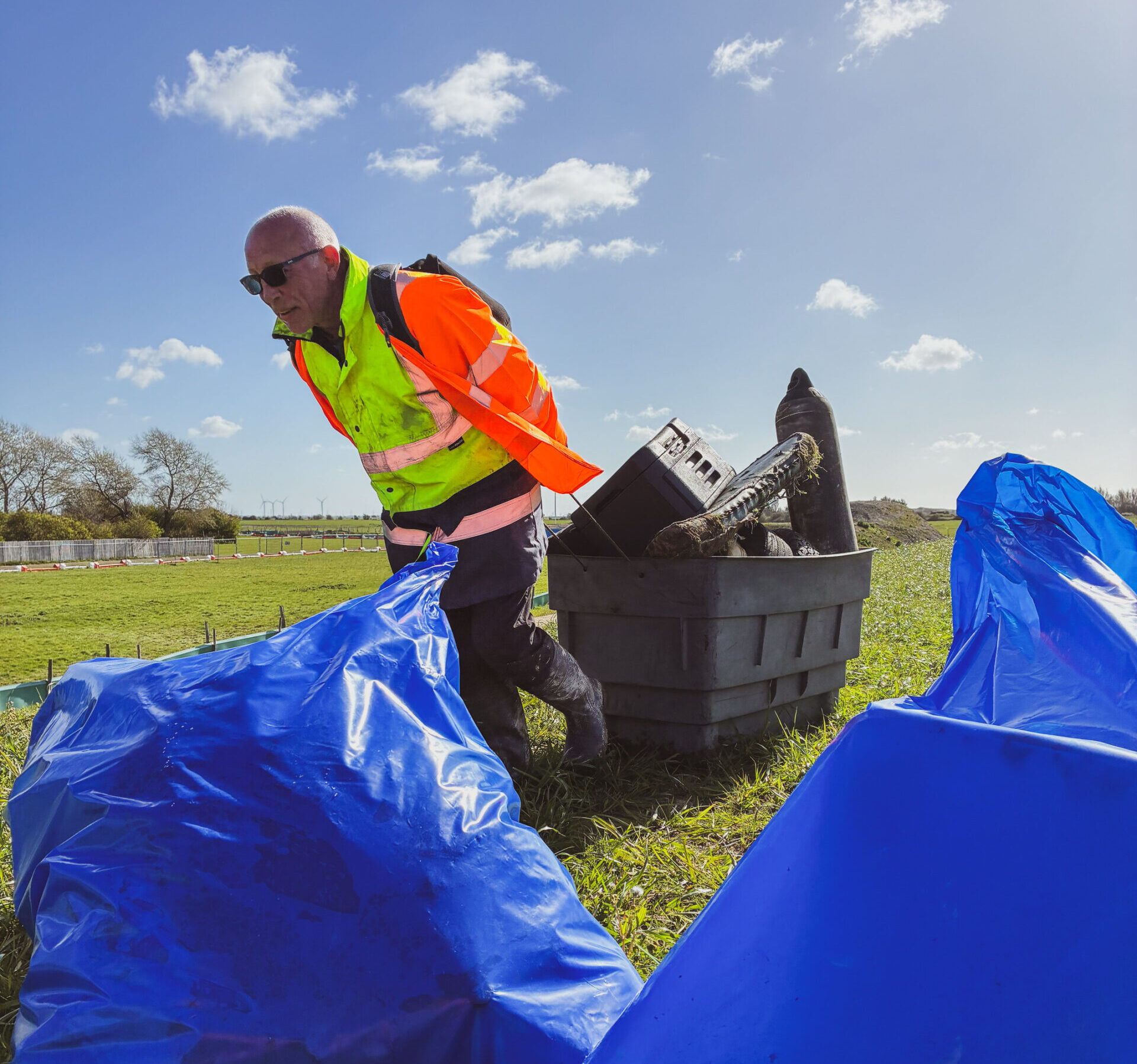
Much of the microplastics that end up on beaches come from larger items, bought down via rivers. Collecting the plastic objects when they are still intact is not just easier, it also prevents them breaking down into smaller pieces that end up on the beach, the saltmarsh and into the food chain.
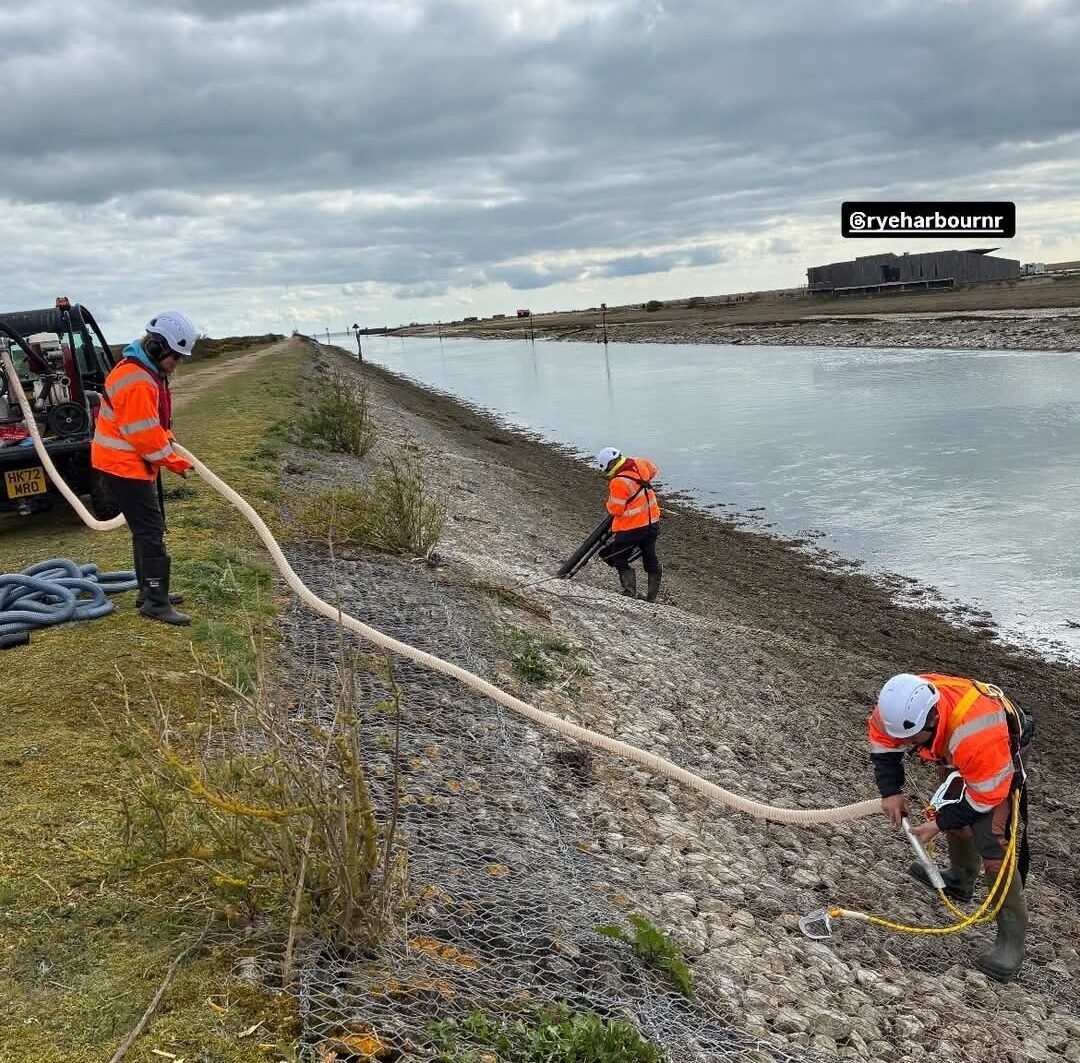
On the opposite side of the river from the nature reserve, the Nurdle vacuum has also been used to hoover up beads between the wire mesh gabions along the river.
On the reserve, it is nesting season and ground-nesting birds cannot be disturbed, so the collection of beads is on hold until later in the year. The team will return around September or October, to assess the situation and see if further work needs to be done on the reserve’s saltmarsh.
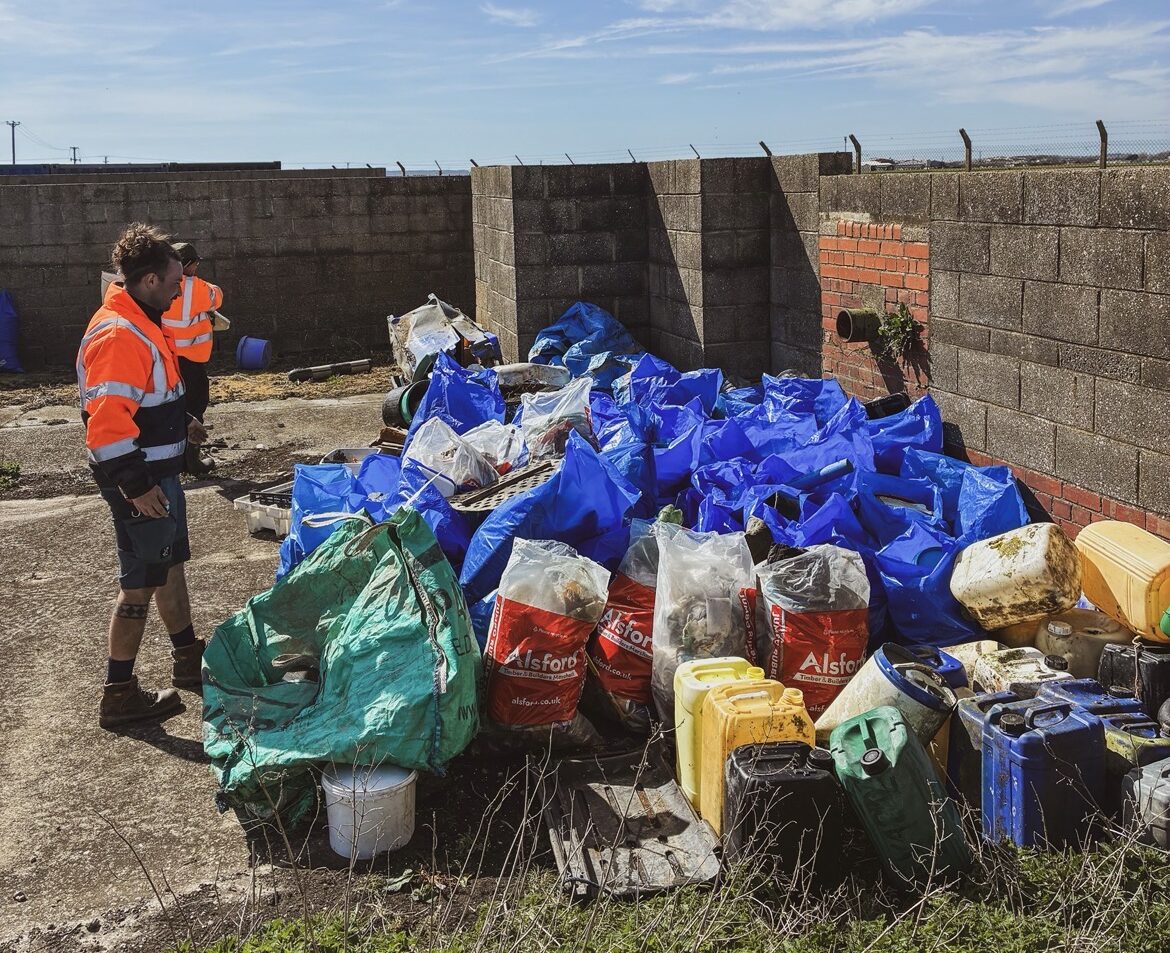
Image Credits: Nurdle .