


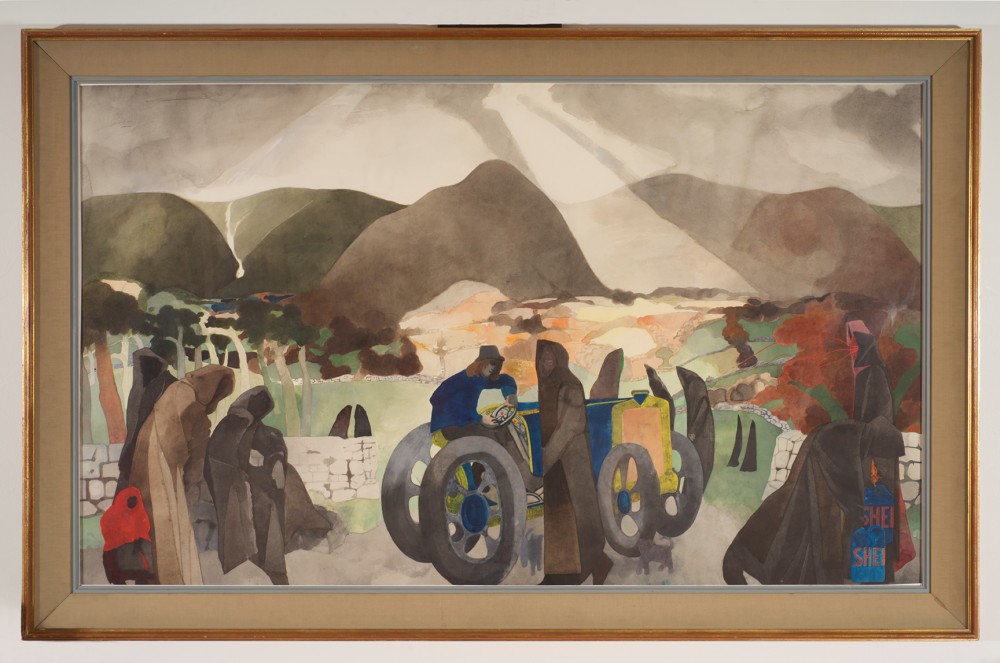
While we’ve been enjoying the wonderful Rye Arts Festival, the Tate Britain Gallery in Millbank, London, has until October 19, a remarkable exhibition of work by Edward Burra (1905 – 1976) who lived much of his life in Rye. Their impressive collection traces his progression from cripplingly ill young man, who was nurtured and yet stultified by his patrician Rye family, through his years of rebellion, to being eventually becoming a national treasure who had painted British and Irish landscapes, although in a characteristically trenchant style.
In between, Burra had set off for excitement at Chelsea Art School, and then the Royal College of Art, before heading to Paris and Marseille. He’d rejoiced in the louche world he’d discovered in the daring night clubs, red-light cafes and bars of the French Jazz Age’s ‘Anneés Folles’. He also developed a fascination in painting people of colour, working women and sailors, and sharpened his contempt for the bourgeois youth who, like him, were drawn to the fringes of this forbidden and sometimes criminal underworld. He delighted in the world of rhythm, colour and transgression.
After France, he depicted his experiences in the USA and Spain. Keeping company with fellow Ryers Conrad Aiken and Paul Nash, he captured the dramas of Spanish dress, flamenco dancing, bullfights and the ancient cityscapes in increasingly surreal ways. The sudden shock of the Civil War led him to flee.
The Republicans’ burning of churches had inclined him initially towards the Francoists, but their brutality led to a swift change of mind. His art became sombre and macabre, showing the combatants as dehumanised, and often capturing the death and destruction in nightmarish images packed with mythological figures.
But before Spain, Burra had walked out from Rye one day without explanation and ended up in New York. He’d revelled in depicting the music, dance and personalities that filled the pre-war Harlem jazz clubs and speakeasys. He’d evidently also enjoyed the vibrant life on the rough Boston harbour waterfront, capturing this in his characteristically vibrant paintings.
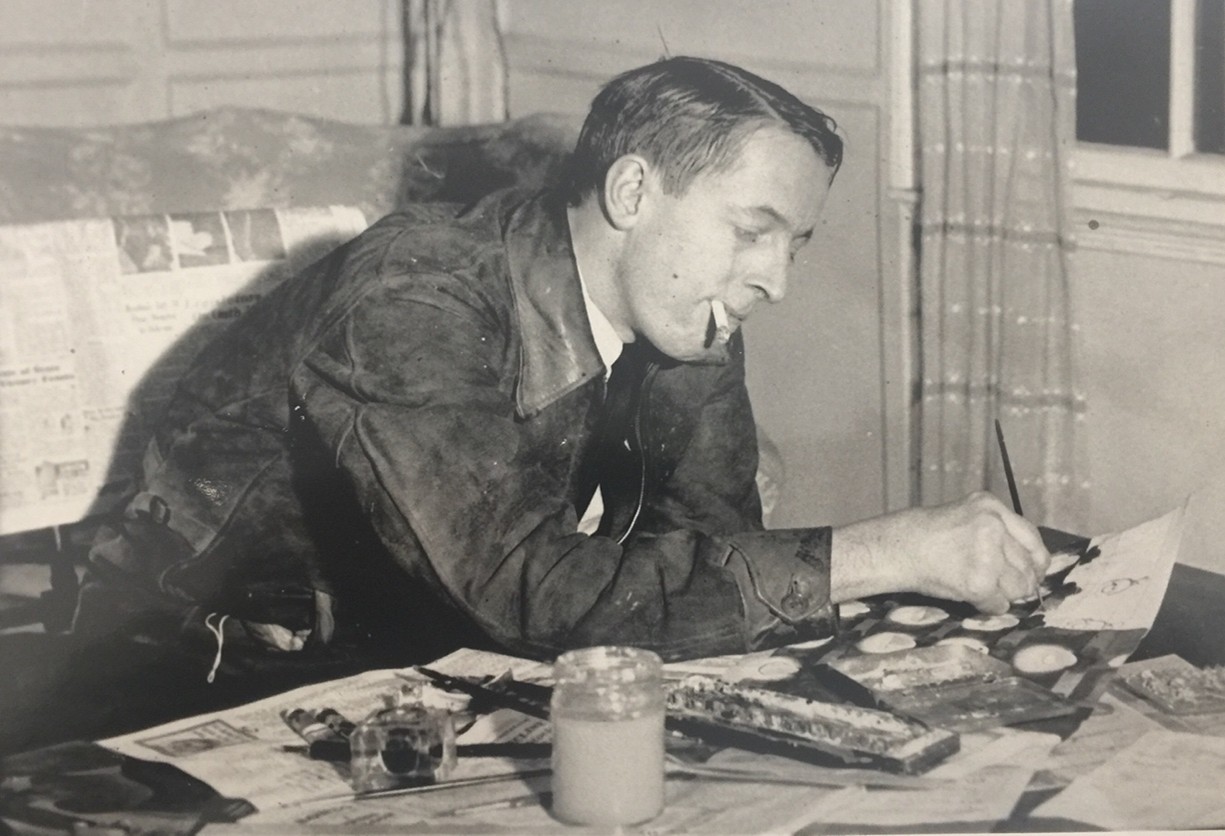
Burra was grounded in Rye over the second World War. He felt trapped and medication was hard to find for his poor health. To his physical pain was added his strength of feeling against the ubiquitous and, to him, brutal military presence. His paintings show revulsion against the ranked troops and their trucks, tanks and equipment. His paintings don’t reflect his community’s desire to see Nazism defeated, but instead convey an intensely personal rejection of dullness, regimentation, violence and inhuman machinery.
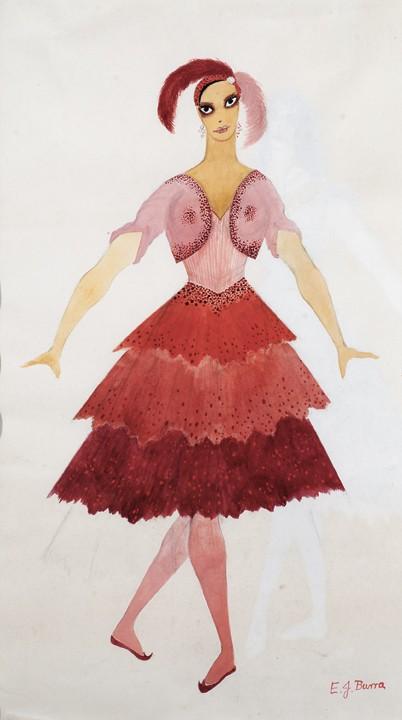
Post war, Burra’s successful, high society, friends from his joyously free years fed him a series of fantastic commissions, creating highly original ideas for opera, ballet and theatre scenes. He rediscovered his delight in beautiful music, dance and people, expressing this in new work.
His failing health gradually moved him towards landscapes, applying his photographic memory to recall striking vistas that he’d shared on long road trips with his aristocratic sister. He gradually expressed more forcefully a love of nature and pre-industrial human additions to the landscape. Despite travelling by car, he opposed new roads, mines and quarries and detested oil companies! His riotous jazz years behind him, he painted fewer people. His sense of the macabre remained, along with a sharp awareness of his own morbid condition.
After his death in 1976 his sister donated all his many paintings, papers and large collection of records to the Tate. Her generosity allowed us to enjoy these as we made our way around this striking exhibition.
The exhibition at Tate Britain also includes one of the finest pieces in the Rye Art Gallery’s permanent collection, the watercolour Black Mountain, Wales (1968)
Image Credits: Donated by Friends of Rye Art Gallery and the National Art Collections Fund 1970 , Rye Art Gallery .
The review of this artist, whom I knew little about, made me book a ticket to London posthaste.
Richard Jardine has crafted a succinct and evocative portrait of Burra’s life and struggles, provoking a compelling urge to seek out the artworks. A great review.
An excellent piece by Richard Jardine though he doesn’t mention Edward’s three close friends, as my Cousin Denny pointed out. They were Billy Chappell, Barbara Ker-Seymer and Clover de Pertinez who all met at Chelsea School of Art in 1921 when they were still teenagers. They had wild times together and bonded for life – much reflected in Billy Chappell’s scurriless book “Well Dearie”, a catalogue of postcards, often illustrated, that they sent to each other through six decades.
Thanks so much for this excellent review. I’ve got tickets for this week to visit the Tate. More interested now and high anticipation!
An excellent article about Edward’s astonishing life considering his ill health from a very young age. I don’t think his sister Anne would consider herself ‘aristocratic’! The Tate Britian exhibition is extremely well curated so don’t miss it if you can get there in time!