


Last week in Rye News we brought you the story of the couple bringing Deacon’s Corner at the bottom of Landgate to life with colourful pots, plants and trees. As part of the transformation they’ve pulled up some of the weeds on Fishmarket Street. An example to us all says Vic Vicarey.
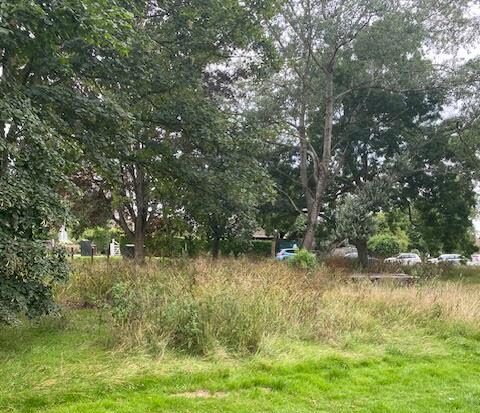
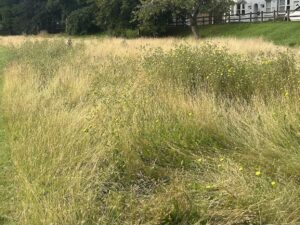
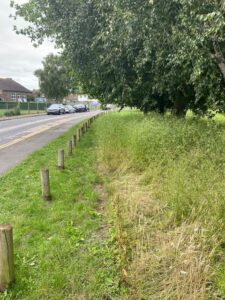
Is there anybody who can tell me why so many places in Rye look so shabby at the moment? There is overgrown grass and weeds all over town – some of it well over 3 foot high.
It’s a real mess and has no purpose.
We need another visit from the Royals and then maybe the local authorities might do something about it. At the moment they’re doing nothing and it looks awful.
Rye News welcomes all opinion pieces on issues that affect life in Rye and the surrounding villages. If you would like to add yours to our Opinions section email info@ryenews.org.uk.
Image Credits: Vic Vicarey .
Weeds to you but food and shelter for wildlife. Look a little deeper into the ‘weeds’ and you will see a mirriad of wildlife thriving on these native plants. These would not be there if it were cut back to a featureless desert of perfectly manicured grass.
We are always told about the terrible loss of bees, butterflies and other invertibrates from our countryside – if a few wild spaces in towns can help reverse this decline surely it can only be a good thing.
Spot on Neil you are so right we must all learn NATURE DOES NOT DO TIDY!!
‘A real mess’, is, of course, parts of Rye grassland which has intentionally been left free from spraying and mowing for the summer months.
This encourages wildlife such as bumblebees and hundreds of other insects, which benefit the environment and us. It also avoids fumes from petrol mowers.
Normally mowing would happen in August and September with the hay allowed to stay for a while to allow wildflower seeds to drop.
I celebrate rewilding as a means to address the problems caused by the extent to which natural
landscapes have been diminished to 7% in the U.K.- the lowest in Europe. We need bees and other insects and they require places to flourish.
Many serious diseases that affects humans and other animals especially dogs, like Lyme disease from over grown weeds Ticks Fleas Hornets Wasps fleas spiders.
Create your garden to attract bees and butterflies and other friendly bugs we’re surrounded by farm lands east, west,south and north of Rye plenty of room for bumblebees and other insects in the hedges and ditches.so keep Rye town free from unsightly weeds grow more flowers in your garden.to attract the bumblebee.
Vic v
The “weeds” are carefully managed wildlife refuges…it’s the 21st-century way of gardening, with nature in mind. There are mown paths for humans and dogs to walk on. I find objections to gardening for wildlife particularly objectionable when dogs are given as a reason; I like dogs, but there are far, far too many of them in this country, and even the shortest walk offers proof that many owners are irresponsible when it comes to clearing up their disease-carrying mess. I never really understand why we are so willing to live in what essentially is a dog toilet. Dogs are also far more important vectors for fleas than grass is, unless the owner daubs them with chemicals that are harmful to wildlife and probably to the dog itself.
Wasps and hornets are far more likely to nest in a tree or under the eaves of a house than in grass. Spiders are everywhere, and provide food for birds anyway. And as Chris says, the Salts will be mown soon and kept short for the winter. I’m happy to see long grass here and there in Rye!
Jane is absolutely right. Weeds are in fact wild flowers which we all profess to enjoy. But perhaps less so when growing in the “wrong place”. But wild flowers always grow in the “right place” – for them. Otherwise they won’t grow at all of course. It has been quite delightful walking through The Salts where paths have been cleared to allow an easy track through to admire the wealth of these wild flowers flourishing on either side. Earlier this summer I led a short walk through the town pointing out the names of the various wild flowers and it was much enjoyed by the participants who were keen to hear names given to these “weeds” and to discover something about their habits and lifestyles. “Long Live the Weeds of Rye !”
Please keep these grasslands wild, we need all the diversity and wildlife possible to combat the decline of insects. So much more interesting to look at than browning cropped grass. Given time more wildflowers should emerge. Money from cutting is being saved by cash strapped Councils.
Most dogs are walked through fields and woodland not just on sterile land and pavements so risk of ticks is in most of their environments. Sadly we now know that flea/tick treatments are contributing to decline of bees/insects and aquatic life. Please let’s give nature a chance. I love both my dog and nature and also yes to wild places in our gardens.
A serious problem that councils urgently need to address is large weeds actually growing on public pavements — often right in the middle of them! This seems to be happening with a number of tarmac pavements in my neighbourhood. Weeds and grass are also growing apace at the edge of pavements and in the gutters of many roads. If the councils fail to remove the weeds, especially those on the pavements, they will end up having to resurface the damaged pavements, at great cost to council tax payers (us). It’s a false economy to ignore this issue.
It is interesting to read the comments on here about the old town Salts,and i wonder how many people were living in this town then when the Salts was a haven of activity for all walks of life,Looking around the town and we see overgrown roadside verges, and let’s not forget our river banks,through the centre of town we have a Green Lung running either side of the railway line,I think it’s short sighted of the council who are always complaining they are short of funds, when this main focal point, could generate funds if it was hired out like it used to be,for all to enjoy, instead of an overgrown eyesore which might suit some, but I’m sure the silent majority would love to see it as it was, a recreational area to be enjoyed by all.
I am curious what consideration is given to fire safety when these rewilding spaces are chosen? We’ve had 3 extended warm/dry spells so far this year. Long dry grass doesn’t take much to combust. Long grass also attracts the litter tossers.
To offer a compromise, why not keep these areas better manicured, thus encouraging everyone to take better care of our open spaces, and strategically place “bee/butterfly/bug hotels” around the town? They’re inexpensive to make, proven to be highly effective and with the correct signage could be used as an educational tool for all to increase awareness and appreciation of our towns wildlife. With some creativity, imagination and will, they could eventually become a feature of our town offering something different for visitors/tourists of all ages to enjoy, assuming they do not fall victim to vandalism.
A weed is only a plant growing in the wrong place.
The area of the Salts could be a fantastic wildlife area, but sadly the only plants growing there are Ragwort and Spear (Scotch/ Gore) thistles both classified as noxious weeds for the damage they can do to livestock and productive farmland.
Over the years we have seen an explosion of Ragwort, it is toxic to horses and cattle if eaten when it is dry in hay or silage. It is a cumulative poison which builds up in the Liver and it does kill, fortunately care is taken to keep it from livestock feed. Every plant if it seeds will release tens of thousands of potential new plants and believe me if you get them in your garden they are difficult to get rid off except by chemical means.
The Gore thistle which is beginning to seed on the Salts is the most pernicious of the thistle family as every seed is viable and will live in the ground for some years. Before sprays were used, teams of Spudders would go out on to the productive grasslands of the Marsh digging these up. I still have a Gore spud which I use most days as it is preferable to using sprays on productive grassland.
With the new area of Salt Marsh where the Tidal walls project has been almost completed, all these weed seeds will blow over on to this land and there will become several acres more of Ragwort and thistles. It is unfortunate that when these predominate no other “good” flowering weeds will get a chance to grow. I doubt the EA will have the money to manage the area so it will become a large rubbish filled wasteland.
Now that there is an Orchard on the Salts surely it would be better to actually plant a wild flower meadow on the derelict area that exists now and have paths through it for people to walk on that are kept mown.
The present situation is a disgrace and makes a poor impression of the Town. I too remember when the Salts was a great recreational space for the town and fairs and events were held there.
You’re spot on mr Langish totally agree with what you say I also remember where all the ugly weeds are now Rye football club played there also Rye had a Hockey team men and women also played there. Just adjacent to the Bowls Green was the changing room building.
The picknic area where the seats and table area a disgrace long grass and weeds everywhere
Let’s hope the Authorities read mr Langish comments
Vic v
Come on Rye, listen to Frank who obviously knows a thing or two about land management, more than one expert said that there’s more to it than just stop mowing.
Well said Frank. A countryman knows the country and everything he states is a fact. Plants like Ragwort are the cockroaches of the plant world – formed to survive virtually anything, generous in spreading windblown seeds and dominating gentler, beneficial plantlife. I have long argued with RDC about their take on re-wilding – allowing an area to become overgrown with just anything, is not re-wilding. Sadly, the same issue is now affecting another of Rye’s green recreational areas as RDC are no longer mowing Mason’s Field at Tilling Green. I can only suggest that hundreds of letters complaining about the state of Rye’s beautiful, communal areas may excite someone’s notice. Please try it.
Further to Franks comment and my earlier comment, The High Weald National Landscape Partnership currently runs two grant schemes. One of which (High Weald Nature and Community Fund, previously known as Sussex Lund) may be a possible source of funding for planting wild flower meadows, bee/butterfly/bug hotels, nesting boxes, etc. https://highweald.org/grants/
Maybe this is something for our Mayor and town councillors to get their teeth stuck into, with grants being awarded in December 2025.
It is important to note, The High Weald National Landscape Partnership provide advice and support with developing projects and submitting a grant applications.
Have Rye News asked Rye Town Council and Rother District Council to comment on their rewilding protocols and management plan ? As someone else there’s so much more to it than just stop mowing !!
Having just got back from a 14 day cruise of Spain, Italy, and the Rock of Gibralter, I was amazed how clean all the ports that we stopped at, no potholes broken pavements, no parking illegally blocking pavements, no overgrown eyesores, and real police on the streets, when did it all go wrong in this town.
I rarely agree with Mr Tolhurst but travelling in Spain and France recently , it’s true, the roads are impeccable with decent cycle lanes and every town has a Tourist Information Centre and open toilets.
We’ve become the poor man of Europe, lack of investment and declining trade with our nearest neighbours. Brexit?
PLEASE STOP putting TARMAC on Conduit Hill.
We are proud of our COBBLED streets.
Do the job properly!
In my opinion, due to climate change and supporting wildlife, it has become more acceptable now, to leave verges, open spaces, and parks to grow wild. However, what happened to weeding pavements, cracks along walls, and kerbs, and cobbles? It makes our town unkempt, scruffy and uncared for. This is on a par with the public toilets.
And the tarmac on the cobbles
Some interesting points of view here – I am in accord with those who point out that nature does not do tidy and that ‘weeds’ are merely wild plants in the wrong place – if that place is required for some purpose other than growing actual flowers. Frank Langrish makes a good point when he says ‘plant a wild flower meadow on the derelict area that exists now and have paths through it for people to walk on that are kept mown.’ And several others are clearly in favour of a more natural habitat for this land. I’ve spent the last 35 years converting former intensively managed arable land to wild flower meadows. It takes time! And management. Just leaving it won’t work – it will become woodland eventually. So – 1) cut the grass now, and clear it. 2) Either source hay from an existing highly diverse wildflower meadow and spread it so the seeds drop, and repeat for 10 years; or source seed from same (I can supply next year but ours has been sold now for same purpose); 3) allow to regrow, especially the multiple species of delicate native grasses and REALLY importantly yellow rattle – what is sometimes known as the meadow maker. 4) Repeat yearly and you will slowly see results. Do what Frank says and cut paths through it. You’ll be surprised by 2035!
I can’t begin to count the number of times I have tried to explain this to Parish Councillors and members of the public who want an instant solution. You are right that it takes decades of consistent treatment to create a true wildflower meadow – way beyond the attention span of any local authority or residents’ group. We often see poppies and cornflower planted. It looks lovely, but it’s no wildflower meadow.
The comments from Christopher Broadbent, Andrew Mier, and others are correct.
To leave an area of grass uncut, and to imagine that it will form a wildflower “meadow” is foolish.
To create a true wildflower meadow is labour intensive – you must first impoverish the soil (nutrient rich, eg clay, soil is practically impossible for this). Then you kill the competitive weeds’ root systems (eg by placing a sheet of black plastic over the soil for a few months – or the ruthless could use a herbicide). Then add some very weak feeble top soil. Then sow wildflower seeds. Add water. After that you have a nice display of colourful wild flowers for a couple of weeks……
And how much would that cost? much cheaper to stop mowing, put up with the annual displeasure of the locals and move on….
So it needs mowing. Cllr Andrew Mier – was that an attempt to swerve the issue? You have sway at RDC – please see to it that our public spaces are treated with the respect they require, justify some of the council tax residents of Rye pay and have these areas restored to spaces that can actually be enjoyed by the people for whom they were intended when bequeathed to our Town!
Looking at the Strand Quay now the environment agency have finished it,it is a pleasure to walk along and sit on the benches provided, sadly not along the opposite side in Winchelsea road, with an overgrown hedge blocking the path,and an excuse for rewilding on the half circle,which has turned into an ugly eyesore.Surely with some vision from Rye Council this area,which is another gateway into the town,could be transformed into a lawn and two flower beds, and I’m sure funding and sponsorship could be found,for this embarrassing wasteland, that does nothing to enhance thus part of town,for all to admire.