


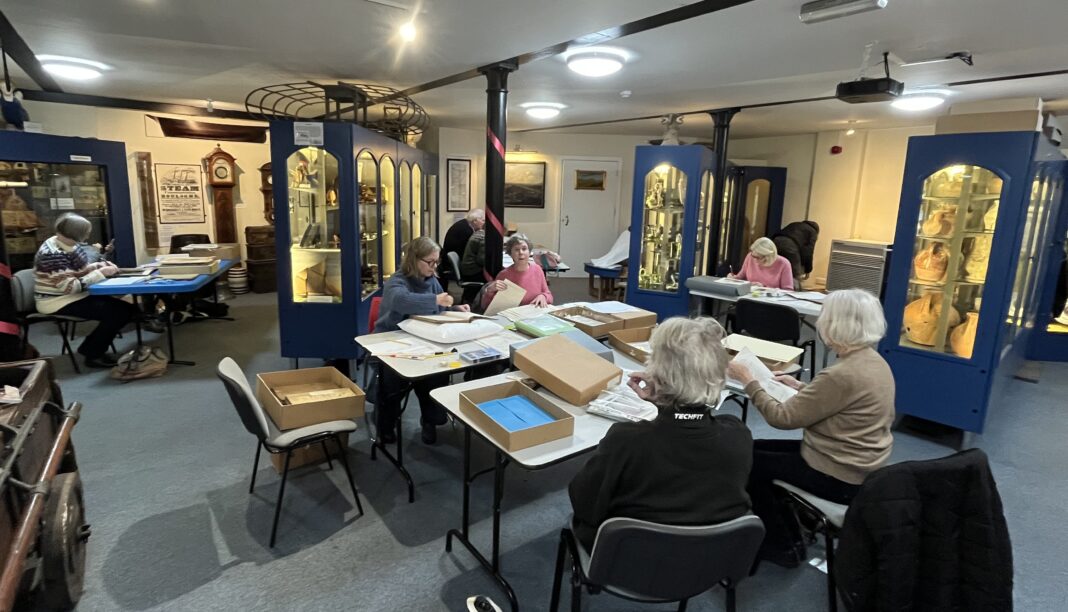
Over the last few weeks, on a Tuesday, volunteers and directors of the museum have been meeting at the 3 East Street site of Rye Castle Museum to work on recording and cleaning the museum’s archives.
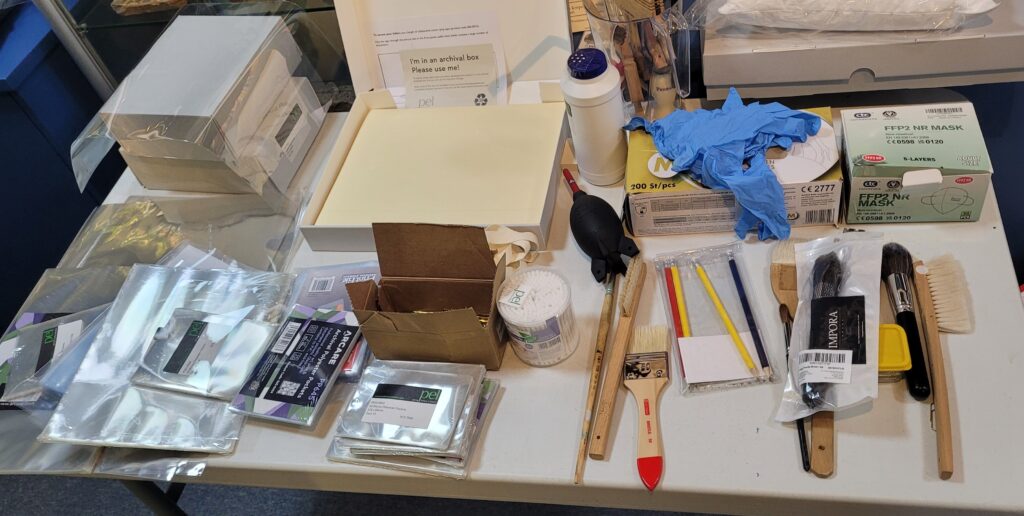
Volunteers are given boxes that have been sorted into subject areas – anything from the history of Rye Harbour to documents on the Cinque Ports to the research undertaken for a museum exhibition on sheep farming. Their job is to record information about each item including a description of the object or document, its size, condition and any existing accession number. At the same time, the box and the document is dusted with soft brushes and any foxing, mould or other marks, removed.
It is a fascinating few hours and people enjoy looking at or reading the documents, photos or other ephemera. There is a hushed atmosphere as people work carefully on their given subject but the quiet is punctuated by people sharing interesting information or personal memories or asking questions about something that they have come across – there is a wealth of knowledge amongst the assembled group.
Each box and subject reveal something of interest. Amongst the boxes of research and documents on Rye shipping and fishing vessels of the 19th century are extensive handwritten notes by AC Sargent from the 1950s and 60s. They include details of the shipbuilders, the owners, masters, Lloyds insurance register reports on losses and wrecks (the number listed lost, foundered or wrecked is high)- research undertaken from numerous sources before the time of photocopies and mobile phones – a painstaking and methodical task.
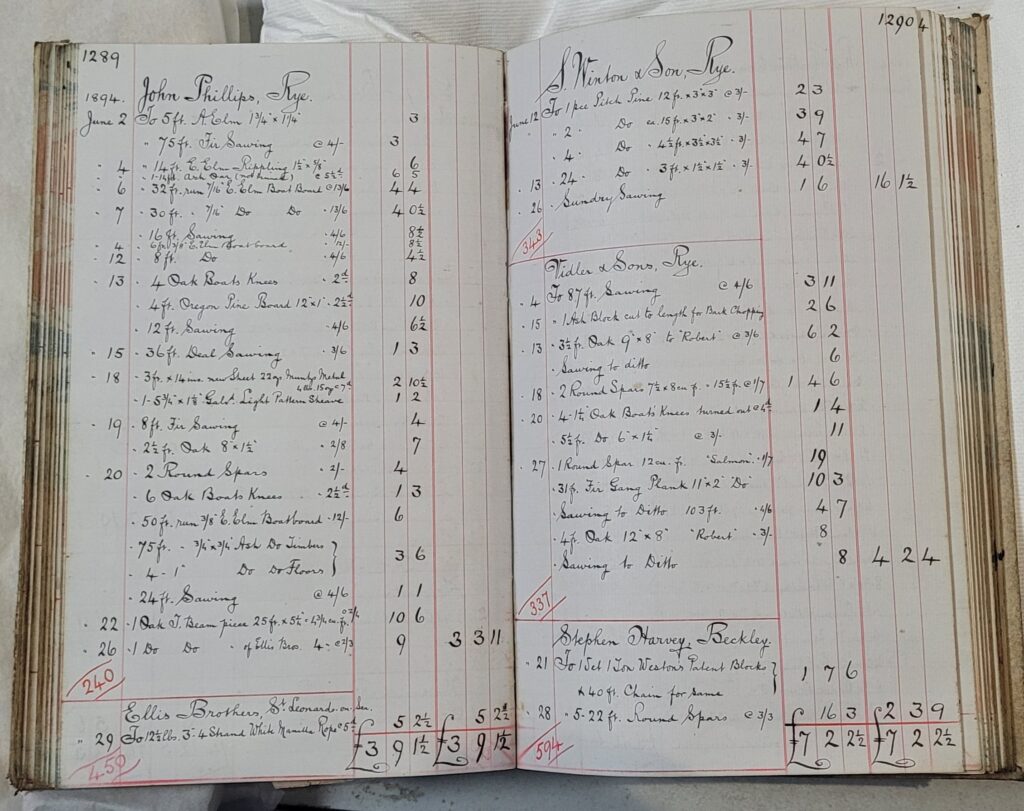
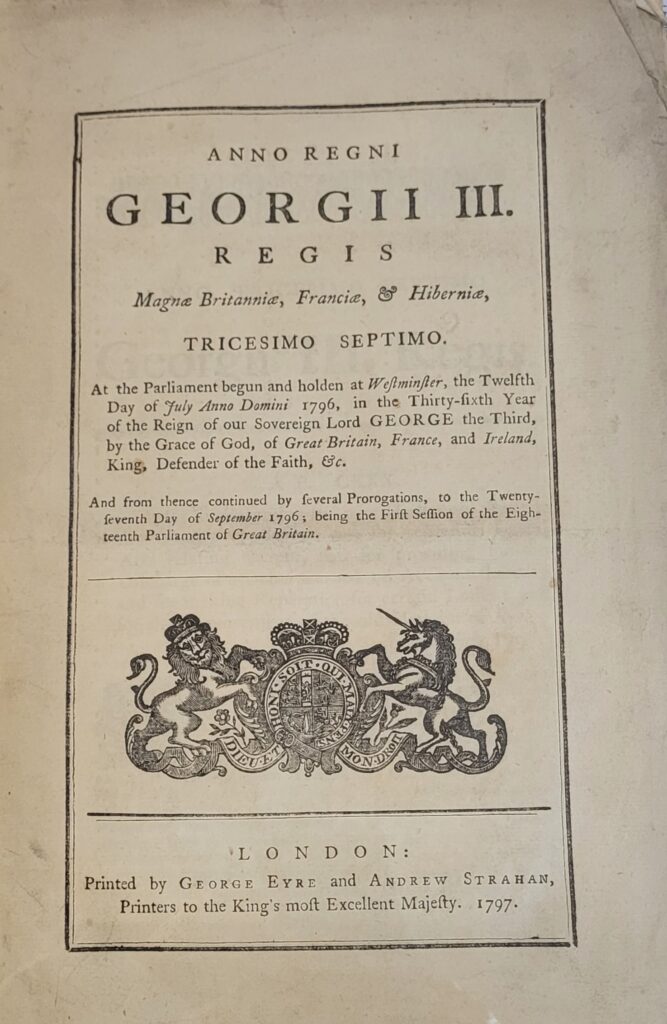
There are 19th century account ledgers detailing wages and costs of materials from different shipbuilders and suppliers including Hoads, Phillips and Vidler, all in beautiful handwriting. Information on the construction and upkeep of Rye Harbour includes copies of Acts of Parliament from 1797 and documents relating to the opposition to new sluices on the marsh.
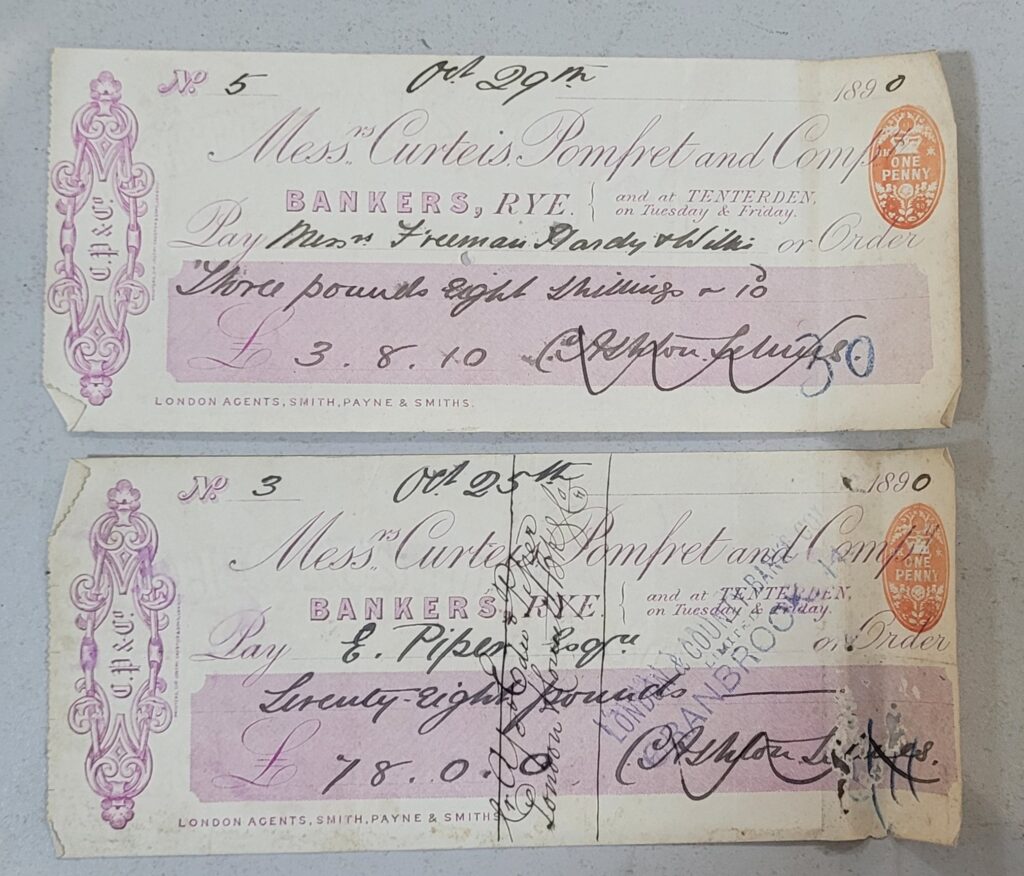
The job of cleaning each page of books and ledgers can throw up all sorts of surprises – serendipitous gems that are not immediately related to the subject in hand. A leather-bound 19th century account ledger from the Selmes hop farm lists the workers, their roles and their wages (fascinating in themselves) but hidden inside were two cheques from the Rye bank – Curteis, Pomfret and Company, dated October 1890. This was one of several private county banks in Rye and was established in 1790 and acquired by Lloyds Bank in 1893. One of the cheques was made out to an E Piper and the other to the shoe shop, Messers Freeman Hardy and Willis (founded in 1875 and now only operating online), prompting people to exclaim that they did not know that the shoe shop chain had started so early.
If you are interested in getting involved with helping with the archives, the museum welcomes new volunteers. The sessions take place every Tuesday and are split into morning (9.30am to 12.30 pm) and afternoon groups (1.30pm to 3.30pm). New volunteers are given instructions about the cleaning process and storage, and there are delicious homemade refreshments supplied by Jen and David Tomkinson to sustain.
For more information contact the museum office on info@ryemuseum.co.uk or on 01797 226 728.
Opening times for the museum can be found here.
Image Credits: Juliet Duff .
It is a very interesting morning looking at the archives. Letters from Rye Council, clerks and mayors in 1936, talking about the accession of the new King, apologies they couldn’t be at the memorial of the late king. Then various newspaper pages of Rye and Hastings and other areas around the same time 1936 plus adverts which are now so dated.
And that is just one file of several in the box.